
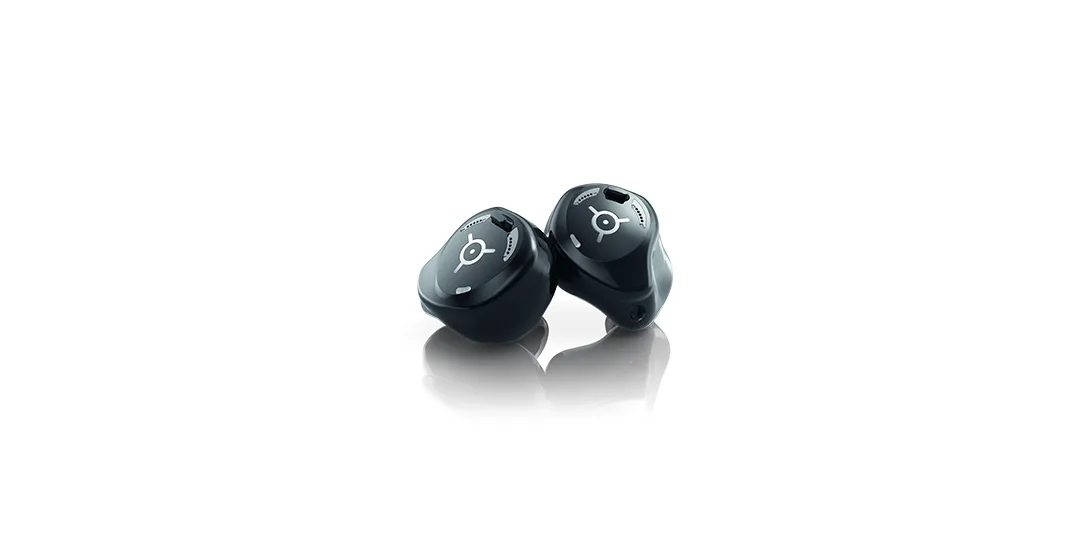


Can headphones damage your hearing? Safe listening tips to protect your ears

Can headphones damage your hearing? Safe listening tips to protect your ears
8 min.
Publication Date: April 30, 2026
Headphones are part of everyday life. Whether it’s streaming music, watching videos, gaming, or taking calls, many teens and adults use earbuds or over-ear headphones for hours at a time. It’s no surprise that questions like “Are AirPods bad for your ears?” or “Can headphones cause hearing loss?” are becoming more common.
The short answer is: headphones themselves aren’t inherently harmful, but how loudly and how long you use them matters. Understanding safe listening habits can significantly reduce the risk of noise-related hearing damage while still allowing you to enjoy your favourite content.
- Can headphones really cause hearing loss?
- How loud is too loud with headphones?
- Are earbuds worse than over-ear headphones?
- Do noise-cancelling headphones protect your hearing?
- What are safe listening habits to protect your ears?
- When should you consider a hearing test?
- Protecting your hearing long term
Note: Our Hearing Care Providers (HCPs) are here to support your hearing health and provide personalized guidance. However, if you're concerned about medical issues affecting your hearing, always consult your healthcare provider first.
Can headphones really cause hearing loss?
Headphones can indeed cause hearing loss—but not because they’re headphones. Hearing damage from headphones happens when sound levels are too high for too long.
This type of damage is known as noise-induced hearing loss, which occurs when prolonged exposure to loud sound affects the delicate hair cells in the inner ear. Once damaged, these cells do not regenerate.
Headphones can increase risk because they deliver sound directly into the ear canal. If volume is consistently high—especially over extended periods—cumulative exposure can contribute to permanent hearing changes. The risk increases when listening at elevated volumes becomes a daily habit.
How loud is too loud with headphones?
Safe listening depends on both volume and duration. Sound levels above 85 decibels (dB) can become harmful with extended exposure, and many personal devices can easily exceed that threshold at higher volume settings. Here are practical guidelines for safe headphone volume:
- Keep volume at no more than about 60% of maximum.
- Follow the 60/60 rule: 60% volume for no more than 60 minutes at a time.
- If someone next to you can hear your music, it’s too loud.
- Ringing in your ears after listening is a warning sign.
- Use built-in volume limit settings on devices.
For more detail on decibel thresholds and how volume interacts with time, our guide on safe noise levels explains how exposure builds over time.
Are earbuds worse than over-ear headphones?
Many people wonder whether earbuds are bad for you compared to over-ear headphones. The reality is that volume habits matter more than the style itself. In-ear devices (like AirPods or earbuds) sit closer to the eardrum, which can increase risk if volume is high. However, over-ear headphones can be just as harmful if used at unsafe levels.
One key factor is background noise. When you’re in a noisy environment, like public transit, you may unconsciously raise the volume to compete with outside sound. That increase in volume, not the device style, is what contributes most to hearing risk. Fit and listening habits ultimately matter more than whether headphones go inside or over your ears.
Do noise-cancelling headphones protect your hearing?
Noise-cancelling headphones can help protect your hearing, but only when used properly. They may support safer listening by:
- Reducing background noise so you don’t need to raise the volume.
- Allowing clearer listening at lower sound levels.
- Improving comfort in loud environments like airplanes.
However, they do not automatically protect hearing if you still listen at high volumes. If music is played loudly through noise-cancelling headphones, the risk remains.
We explore this in more detail in our article on noise-cancelling headphones and hearing protection, including how to use them effectively.
What are safe listening habits to protect your ears?
Protecting your hearing doesn’t mean giving up headphones. It means building consistent habits that reduce long-term exposure risk.
Taking listening breaks is one of the simplest and most effective strategies. Giving your ears time to rest allows auditory cells to recover after sound exposure.
Lowering volume in quiet environments can also make a difference. If you don’t need to compete with background noise, avoid turning the volume higher than necessary.
For teens and young adults, parental volume controls and built-in device limits can help maintain safe levels. Modeling safe listening habits reinforces healthy behaviour over time, especially for children.
Ultimately, consistent moderate listening is far safer than frequent high-volume sessions, even if those sessions are brief.
When should you consider a hearing test?
Occasional headphone use at safe volumes is unlikely to cause immediate problems. However, certain symptoms suggest it may be time to schedule a hearing assessment. You should consider a hearing test if you experience:
- Ringing or buzzing in the ears (tinnitus)
- Muffled hearing after listening sessions
- Difficulty understanding speech in background noise
- Needing to increase volume more than before
These symptoms don’t always mean permanent hearing loss, but they are signs your ears have been stressed. A hearing test can provide clarity and establish a baseline for future monitoring.
Protecting your hearing long term
Headphones are not the enemy—unsafe listening habits are. By keeping volume at reasonable levels, taking breaks, and being mindful of exposure time, you can significantly reduce your risk of hearing damage.
Key takeaways
- Headphones can cause hearing damage if used too loudly for too long.
- Safe listening depends on both volume and duration.
- The 60/60 rule helps reduce risk.
- Noise-cancelling headphones can support lower volume use.
- Ringing or muffled hearing after listening warrants evaluation.
If you have concerns about your hearing or notice changes after frequent headphone use, you can book a free hearing test or find a Connect Hearing clinic near you to speak with a Hearing Care Provider (HCP) about protecting your hearing long term.
Author
Connect Hearing Canada