
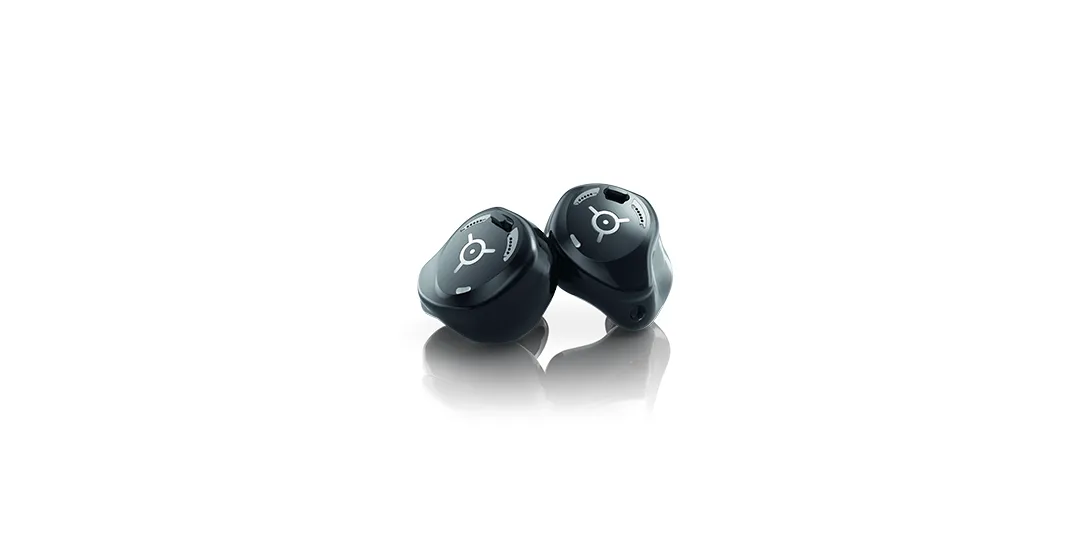


The Pros and Cons of Invisible Hearing Aids

The Pros and Cons of Invisible Hearing Aids
7 min.
11-21-2026 November 21, 2026
November 26, 2026
If you’re considering hearing aids but you want something discreet, invisible hearing aids might be one of the first styles that you look into. These small, custom hearing aids sit inside the ear canal, making them difficult for other people to see.
The term "invisible hearing aids" usually refers to Invisible-in-Canal (IIC) hearing aids and some Completely-in-Canal (CIC) hearing aids. Because they sit deeper in the ear than many other hearing aid styles, they offer a discreet option without a device sitting behind your ear.
Their small size also comes with trade-offs, and invisible hearing aids are not suitable for every degree of hearing loss, ear shape, or lifestyle. They also have less space for batteries, controls, and certain technology.
The right hearing aid should support your hearing and communication needs first, and appearance is just one factor in that decision.
If you are interested in invisible hearing aids in Canada, always start with a hearing test. A hearing care professional (HCP) can assess your hearing and discuss whether an invisible hearing aid is appropriate for your hearing needs and ear anatomy.
What Are Invisible Hearing Aids?
Invisible hearing aids are small hearing devices that are custom-made to fit inside your ear canal. Unlike Behind-the-Ear (BTE) and Receiver-in-Canal (RIC) hearing aids, the entire device sits within the ear.
Two common styles fall into this category:
Invisible-in-Canal (IIC): IIC hearing aids sit deep inside the ear canal and are designed to be difficult to see from the outside.
Completely-in-Canal (CIC): CIC hearing aids also sit inside the ear canal but are typically positioned closer to its opening. Depending on your ear anatomy, part of the device may be visible.
Both are examples of custom hearing aids, where an impression of your ear is used to create a device shaped for your individual ear canal.
You can learn more about these and other options in our guide to hearing aid types and how they work.
How invisible hearing aids work
Like other hearing aids, invisible in canal (IIC) hearing aids use microphones to pick up sound. The device processes and amplifies sound according to your hearing needs before delivering it into your ear. Their placement inside the ear also allows the natural shape of the outer ear to play a role in collecting and directing sound. Because IIC hearing aids sit deep within the canal, a small removal cord is often included to help you take the device out.
Invisible vs. nearly invisible hearing aids
"Invisible" does not always mean completely invisible. Whether someone sees a hearing aid depends on the style, the size and shape of your ear canal, and how deeply the device sits. IIC models are generally the least visible, while CIC hearing aids sit slightly farther out and might be noticeable from certain angles.
RIC hearing aids are not considered invisible, but modern versions can also be discreet. A small device sits behind the ear with a thin wire connecting it to a receiver in the ear canal.
Who Are Invisible Hearing Aids Best For?
Invisible hearing aids are often suitable for people with mild to moderate hearing loss. Some devices support greater levels of hearing loss, but your options will depend on the technology available and the size and shape of your ear canal.
Your hearing loss is only part of the decision, and your HCP will also consider your ear anatomy, ear health, dexterity, communication needs, lifestyle, and technology preferences.
Who is a good candidate?
You might want to discuss IIC or CIC hearing aids with your HCP if you:
Prefer discreet hearing aids
Have enough space in your ear canal for the device
Have hearing needs within the fitting range of the device
Are comfortable handling small devices and batteries
Do not rely heavily on features unavailable in smaller hearing aids
Regularly wear glasses, hats, or other items around your ears
A professional fitting matters because custom hearing aids need to fit both your hearing needs and your individual ear.
Who should consider a different hearing aid style?
Another hearing aid style might suit you better if you want extensive Bluetooth connectivity, rechargeable technology, longer battery life, or easy-to-use physical controls.
Dexterity also matters, and if arthritis or reduced hand dexterity makes handling small objects difficult, inserting, removing, cleaning, and changing the batteries in an IIC or CIC device might be challenging.
Frequent ear infections or excessive earwax can also affect whether a device that sits deep within the ear canal is appropriate, and you should always speak with your HCP or primary care provider if you have concerns about your ear health.
The Benefits of Invisible Hearing Aids
For the right person, hidden hearing aids offer several advantages. Their small size and placement inside the ear canal make them a subtle option while also providing many practical benefits for everyday wear.
Discreet Appearance
IIC hearing aids sit deep within the ear canal, making them difficult to see during everyday conversations. For people who prefer a subtle hearing solution, this is often one of the main reasons for choosing an invisible hearing aid.
Natural Sound Localization
The placement of invisible hearing aids allows the outer ear to continue collecting and directing sound naturally. This can support your ability to identify where sounds are coming from and create a more natural listening experience.
Reduced Wind Noise
Because the microphone sits inside the ear canal rather than behind the ear, it has some protection from wind, which can make outdoor conversations and activities more comfortable, particularly on windy days.
Comfortable With Glasses, Hats, and Masks
Invisible hearing aids do not have a component that sits behind the ear, which leaves more space for glasses, hats, masks, and other accessories and helps prevent multiple items from competing for the same space.
Increased Confidence
Some people feel more comfortable wearing a hearing aid that is less noticeable. If concerns about appearance have made you hesitant to wear hearing aids, an IIC or CIC model could help you feel more confident using your devices throughout the day.
Limitations of Invisible Hearing Aids
The same small size that makes completely invisible hearing aids so appealing also creates some limitations.
There is less room inside an IIC or CIC device for batteries, wireless components, controls, microphones, and other technology, and as a result, you might have fewer features than with a larger hearing aid.
Common limitations include:
Smaller batteries and shorter battery life
Fewer rechargeable options
Limited Bluetooth connectivity on some models
Fewer physical controls
More difficult handling for people with reduced dexterity
Greater exposure to earwax and moisture
More frequent cleaning and maintenance
Possible plugged or "blocked" sensations depending on fit and ear anatomy
Less power than some larger hearing aid styles
Learn more about hearing aid batteries and how to care for them.
What features do you give up?
Choosing the smallest hearing aid often involves balancing visibility against other priorities.
For example, if streaming phone calls, music, or television audio directly to your hearing aids is important to you, a RIC or another larger style might provide more options. The same applies if you strongly prefer rechargeable hearing aids.
Your HCP can explain which features are available with the devices suited to your hearing needs.
Why size affects performance
Hearing aid manufacturers have a limited amount of space to work with inside an IIC or CIC shell.
Larger hearing aids have more room for components like larger batteries, additional microphones, wireless technology, and physical controls. They can also accommodate technology designed for a wider range of hearing needs.
This does not mean a larger hearing aid is always better, it just means that size is one factor to weigh against your hearing, lifestyle, and technology priorities.
Invisible Hearing Aids vs. Other Hearing Aid Styles
There is no single hearing aid style that works best for everyone, and the appropriate option depends on your hearing loss, ear anatomy, and the specific technology available. Here is how common styles compare:
Style | Visibility | Bluetooth | Rechargeable options | Power | Handling |
IIC | Lowest | Often limited | Limited | Lower to moderate | More difficult |
CIC | Very low | Varies | Limited | Lower to moderate | More difficult |
ITC | Low | More options | Available in some models | Moderate | Easier than IIC/CIC |
RIC | Discreet | Widely available | Widely available | Broad fitting range | Easier |
BTE | More visible | Widely available | Available in some models | Broad fitting range | Often easiest |
If you’re new to hearing aids, there is also an adjustment period as you get used to hearing sounds differently and wearing your devices throughout the day. Read our guide on what to expect when adjusting to hearing aids.
How Much Do Invisible Hearing Aids Cost?
There is no single price for invisible hearing aids in Canada, and hearing aid pricing depends primarily on the technology level selected.
Custom manufacturing is also part of the process for IIC and CIC hearing aids because the device needs to be made for your individual ear. When you are comparing your options, ask what professional fitting, follow-up care, maintenance, and other services are included.
If your device uses disposable batteries, you should also account for the ongoing cost of replacement batteries.
Rather than comparing hearing aids on purchase price alone, consider how well each option supports your hearing and communication needs and what professional care is included.
Choosing the Right Invisible Hearing Aid
The best invisible hearing aids are the ones that are appropriate for your individual hearing needs, and the smallest device is not necessarily always the best fit.
Before choosing an IIC, CIC, or another style, consider:
Your type and degree of hearing loss
The size and shape of your ear canal
Your everyday listening environments
Whether you want Bluetooth streaming
Whether rechargeable batteries are important to you
Your comfort handling small devices
Your communication needs
The level of cleaning and maintenance you are comfortable with
A hearing test gives your HCP the information needed to discuss suitable options with you. Book a hearing test at Connect Hearing to find out whether invisible hearing aids are the right choice for your hearing needs.
FAQs About Invisible Hearing Aids
What is the best completely invisible hearing aid?
There is no single best completely invisible hearing aid for everyone, and the right device depends on your hearing loss, ear canal size and shape, dexterity, lifestyle, and the features you want.
If discretion is your priority, an IIC hearing aid might be worth discussing. If features like Bluetooth streaming, rechargeable batteries, or easier handling matter more, another hearing aid style could be a better fit.
How much does an invisible hearing aid cost?
The cost of an invisible hearing aid varies primarily based on its technology level. The overall cost of hearing care can also include custom manufacturing, professional fitting, follow-up care, maintenance, and disposable batteries where applicable.
Ask your HCP what is included when comparing your options.
Are invisible hearing aids worth it?
They can be for people who value discretion and whose hearing needs and ear anatomy are suited to an IIC or CIC device. They are less likely to suit someone who prioritizes rechargeable batteries, extensive Bluetooth connectivity, longer battery life, easy handling, or greater amplification.
A hearing test and discussion with an HCP will help you compare these trade-offs based on your needs.
What is the new treatment for hearing loss?
There is no single new treatment that restores all forms of hearing loss. Treatment and management depend on the type and cause of the hearing loss. Options might include hearing aids, other hearing devices, medical care, or other approaches depending on the cause. If you notice a change in your hearing, start by having your hearing assessed. Your HCP or primary care provider can advise you on appropriate next steps and, where needed, referral to another provider.
Visit your nearest Connect Hearing clinic to discuss suitable hearing aid technology. Where appropriate, you can also ask about an in-clinic demo of suitable non-custom hearing aid technology and our 60-Day Confidence Guarantee.**
**60-Day Confidence Guarantee is not a free trial and payment is required up front. If you are not satisfied with your purchase within 60 days, you will receive a full refund.