


The quick guide to hearing loss treatments
The quick guide to hearing loss treatments
10 min.
Publication Date: December 3, 2025
November 19, 2025
Hearing loss is more common than you might think—and so are the questions that come with it. What kind of treatment do I need? Are hearing aids the only option? Will I get my hearing back? Is it too soon, or too late, to get help?
The truth is that hearing loss affects everyone differently. Some people need a little extra support in specific settings, while others may be dealing with more profound loss that affects day-to-day communication. The most important thing to know is that you have options and you don’t have to figure them out alone. In this guide, we’ll break down the most common hearing loss treatments available today, including:
- Hearing aids
- Cochlear implants
- Bone-anchored hearing systems (BAHS)
- Assistive listening devices (ALDs)
- Choosing the right treatment—and how we can help
Note: Our Hearing Care Providers (HCPs) are here to support your ear health and provide personalized guidance. However, if you're concerned about medical issues affecting your hearing, always consult with your healthcare provider as your first priority.
Hearing aids
Hearing aids are the most common and widely recommended treatment for mild to severe hearing loss. They work by enhancing speech clarity while reducing background noise, and can usually be tailored to amplify sound in a way that fits your unique hearing profile.
Types of hearing aids
There are several styles of hearing aids to suit different hearing needs and lifestyles. Depending on the model, they may offer helpful features like Bluetooth connectivity for phone calls and adaptive technology that automatically adjusts to different environments.
- Behind-the-ear (BTE): Often featuring Bluetooth and rechargeable batteries, BTE hearing aids sit comfortably behind the ear, usually with a custom-moulded earpiece, with a clear tube or wire to the ear canal. They are the most powerful hearing aids and are generally used for severe to profound hearing loss.
- In-the-ear (ITE): Custom-moulded to sit in the ear, ITE hearing aids encompass several styles including IIC (invisible-in-canal), CIC (completely-in-canal), and ITC (in-the-canal). This type of hearing aid is versatile, giving specialists the opportunity to customize features like rechargeable batteries. Because there are no wires, ITE hearing aids are often easier to handle, especially for those with dexterity challenges.
- Invisible-in-canal (IIC) or completely-in-canal (CIC): Tiny and nearly invisible, these are suited to mild to moderate hearing loss—though that also depends on ear anatomy. Although cosmetically discreet, IIC and CIC hearing aids are generally too small to accommodate features like Bluetooth.
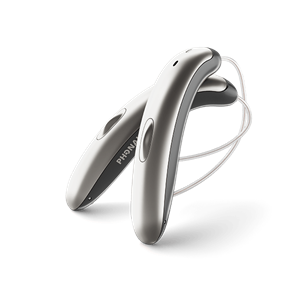
- Receiver-in-the-canal (RIC): Similar to BTE but much smaller, with the hearing aid sitting behind the ear while the receiver sits inside the ear canal. Offers a natural sound experience and is one of the most popular styles today, usually offering rechargeable batteries and Bluetooth connectivity.
What to expect when you get hearing aids
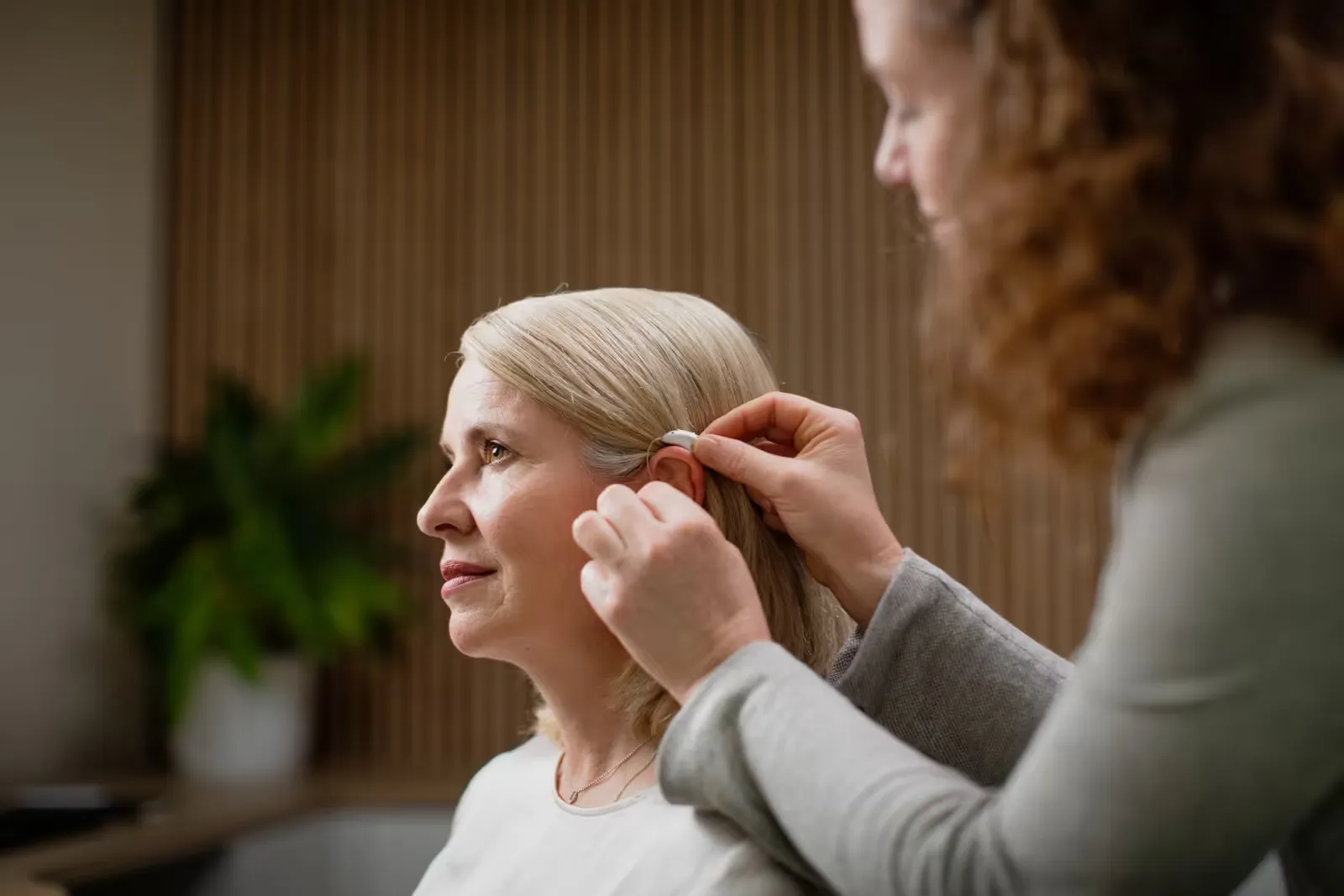
Getting hearing aids isn’t just about picking a device. After a comprehensive hearing test, your Hearing Care Provider will help you choose the right model based primarily on the configuration of your hearing loss but also on your needs, budget, and lifestyle. Then comes the fitting, where the hearing aids are programmed and adjusted just for you.
It may take a few weeks to fully adapt to wearing hearing aids. Your brain needs time to adjust to hearing certain sounds again, but with follow-up care and support, most people report a major improvement in communication and quality of life.
Cochlear implants
Cochlear implants are designed for people with severe to profound sensorineural hearing loss who receive little to no benefit from traditional hearing aids. Unlike hearing aids, which amplify sound, cochlear implants bypass the inner ear entirely. A small internal device is surgically implanted to stimulate the auditory nerve directly. An external processor worn behind the ear picks up sounds, converts them into electrical signals, and sends them to the implant inside the ear.
Who may qualify for cochlear implants?
Cochlear implants are typically recommended for:
- Adults or children with profound hearing loss
- Individuals who receive limited benefit from hearing aids
- People who are medically healthy enough for surgery
Assessment and implantation are done through specialized surgical centres and involve close collaboration with ENT specialists and audiologists.
Benefits, challenges, and recovery
Cochlear implants can provide access to speech and environmental sounds that would otherwise be missed entirely. However, there are some important considerations. Surgery carries a recovery period, and adapting to the new sounds requires time and auditory rehabilitation. Not all users experience the same level of improvement, and outcomes depend on factors like age and duration of hearing loss.
Note: Connect Hearing does not provide surgical cochlear implant procedures, but your Hearing Care Provider can help you explore whether a referral to a specialist is appropriate.
Bone-anchored hearing systems (BAHS)
Bone-anchored hearing systems (BAHS) are a surgical treatment option for certain types of hearing loss, especially when traditional hearing aids aren’t suitable. Instead of amplifying sound through the ear canal, BAHS devices send sound vibrations directly through the bone to the inner ear to bypass any damage or blockages in the outer or middle ear.
BAHS are typically recommended for people with conductive or mixed hearing loss, or single-sided deafness, who cannot benefit from conventional hearing aids due to reasons like outer or middle ear malformations, chronic ear infections, or chronic drainage. While surgery is required, many users report clearer, more natural sound—especially in noisy environments.
Note: Connect Hearing does not provide surgical BAHS procedures, but our team can help assess your hearing and refer you to a specialist if this option is right for you. Some of our clinics have specialized training to work with ENTs and fit the devices after surgery.
Assistive listening devices
Assistive listening devices (ALDs) are a great option for people with mild hearing loss, situational difficulty, or those who want extra support in specific environments—like watching TV or talking on the phone. Assistive listening devices don’t replace hearing aids or implants, but they can be used to further support hearing aid users and make a noticeable difference in everyday situations. Common types include:
- TV listeners: Help you hear your television clearly without turning the volume up for everyone else
- Amplified phones: Make phone calls louder and clearer, with adjustable volume and tone settings
- Personal sound amplifiers (PSAPs): Wearable devices that boost sound in specific settings like meetings or one-on-one conversations
- FM or infrared systems: Often used in classrooms or public venues to transmit sound directly to a receiver
Choosing the right treatment—and how we can help
Finding the right hearing loss treatment starts with understanding your unique needs. The type and degree of your hearing loss, your lifestyle, and even your comfort with different technologies all play a role in what will work best for you.
That’s why a professional hearing test is such an important first step. At Connect Hearing, our Hearing Care Provider take the time to understand your concerns, explain your options clearly, and make personalized recommendations based on your hearing profile. Whether you’re exploring hearing aids, assistive devices, or just need reassurance, we’re here to guide you through the process.
We also offer follow-up care, trial periods, and support programs to help you feel confident in whatever option you choose. You don’t have to figure it out alone—and you don’t have to know all the answers before you book your appointment.
Book a free hearing test or find a Connect Hearing clinic near you to explore your options and next steps.