



Labyrinthitis: Symptoms, causes, and when to seek help

Labyrinthitis: Symptoms, causes, and when to seek help
7 min.
Publication Date: January 26, 2021
Article Updated: January 8, 2026
Labyrinthitis can come on suddenly, leaving you dizzy, off balance, and unsure of what’s happening inside your ears. Because the inner ear is responsible for both hearing and balance, inflammation can affect everything from your sense of movement to how clearly you hear. The good news? Most cases improve on their own with time, and long-term complications are rare.
Knowing what labyrinthitis is, why it happens, and how to manage symptoms can make the experience less overwhelming. Let’s walk through the essentials so you know what to expect—and when to reach out for medical help.
Note: Our Hearing Care Providers (HCPs) are here to support your hearing health and provide personalized guidance. However, if you're concerned about medical issues affecting your hearing, always consult your healthcare provider first.
What is labyrinthitis?
Labyrinthitis is an inflammation of the inner ear, the part of your hearing and balance system known as the labyrinth. To understand where this inflammation occurs, it helps to picture the ear’s basic layout. The outer ear collects sound, the middle ear amplifies it, and the inner ear converts sound into signals your brain can understand while also helping you maintain your balance.
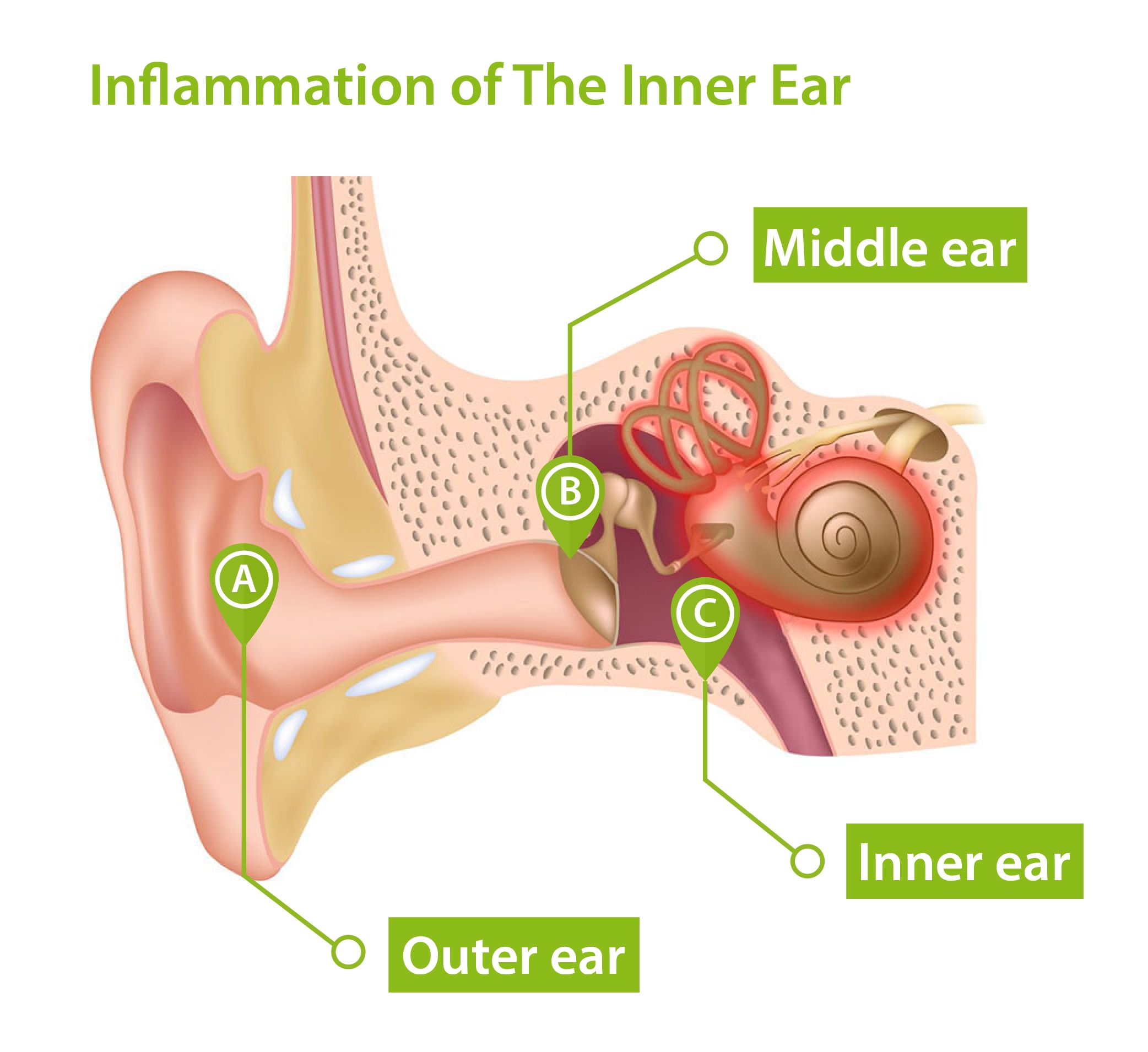
Inside the inner ear, the labyrinth contains fluid-filled canals that sense movement and help keep you steady. It’s located right next to the cochlea, the structure responsible for hearing. When this area becomes inflamed, usually due to an infection, it can disrupt both your sense of balance and the clarity of your hearing.
Labyrinthitis is often confused with vestibular neuritis, a related condition affecting the nerve that helps you keep your balance. The key difference is that vestibular neuritis affects balance only, while labyrinthitis can affect both balance and hearing.
What are the symptoms of labyrinthitis?
Because the inner ear plays a role in both hearing and balance, labyrinthitis can affect multiple systems at once. Symptoms may feel intense at first, but they usually improve as inflammation settles.
Balance and movement symptoms
Many people experience dizziness, vertigo, or the unsettling sensation that the room is spinning. Walking in a straight line may feel difficult, and sudden head movements can worsen symptoms. Some people describe a floating or drifting feeling that makes everyday tasks challenging.
Ear and hearing symptoms
Hearing may feel muffled or unclear, and some people notice pressure or fullness in one or both ears. Tinnitus (ringing or buzzing) is also common. These symptoms are usually temporary, especially with viral labyrinthitis.
Other common labyrinthitis symptoms
Headaches, nausea, vomiting, fever, blurred vision, and anxiety can appear alongside balance and hearing changes. These additional symptoms often relate to the body’s response to inflammation and dizziness.
What causes labyrinthitis?
Labyrinthitis usually develops when an infection spreads to the inner ear. Viral infections are the most common, including those related to colds, flu, or respiratory illnesses. Bacterial infections are less common but can be more serious and may require medication. Other contributing factors can increase susceptibility, including stress, smoking, autoimmune conditions, and recent illness.
The most common causes of labyrinthitis include:
Viral infections (most common)
Bacterial infections (less common)
Respiratory infections such as colds or flu
Autoimmune or inflammatory conditions
Smoking or prolonged stress
How is labyrinthitis treated?
Most cases of labyrinthitis improve naturally within a few weeks as the inflammation settles. Treatment focuses on easing symptoms and supporting recovery.
Your healthcare provider may recommend medications to reduce dizziness, nausea, or inflammation. Antibiotics are used only when a bacterial infection is identified. Rest is important during the early stages, especially if vertigo is strong. As symptoms begin to ease, gentle movement—such as slow walking—can help your balance system recalibrate.
If dizziness lasts beyond the initial illness, vestibular rehabilitation therapy (VRT) may be recommended. These guided exercises, typically provided by specialized physiotherapists, help retrain the brain to adapt to inner ear changes. Your Hearing Care Provider (HCP) may recommend VRT after an initial hearing test.
At home, many people find relief from simple strategies like moving slowly, avoiding sudden head turns, resting in a quiet space during vertigo episodes, and staying well-hydrated. Reducing bright light exposure and keeping walkways free of tripping hazards can also help you feel more secure.
When should you see a doctor about labyrinthitis?
While most labyrinthitis cases resolve with time, some situations deserve prompt medical attention. If your symptoms worsen, fail to improve within several days, or interfere with your ability to walk, talk to your primary healthcare provider immediately. You should also speak with them if you notice:
Sudden hearing loss
High fever or signs of infection
Persistent or worsening vertigo
Ear drainage or severe ear pain
Neurological changes, such as double vision or severe headache
Any sudden change in your hearing requires prompt medical attention; early treatment can be critical.
Living with and recovering from labyrinthitis
Most people recover fully from labyrinthitis, although mild dizziness or imbalance can linger for several weeks. It’s also common to feel anxious during or after an episode, given how unsettling vertigo can be. As your symptoms improve, gradually reintroducing normal activity can help rebuild confidence and stability.
Key takeaways
Labyrinthitis is usually caused by viral or bacterial infections.
Symptoms can affect both hearing and balance, but most cases improve within a few weeks.
Treatment focuses on easing dizziness and inflammation.
Seek medical attention if symptoms worsen or involve hearing changes.
If you’re concerned about hearing changes or ongoing dizziness, we’re here to help. You can book a free hearing test or find a Connect Hearing clinic near you for personalized support.
Author
Connect Hearing Canada