
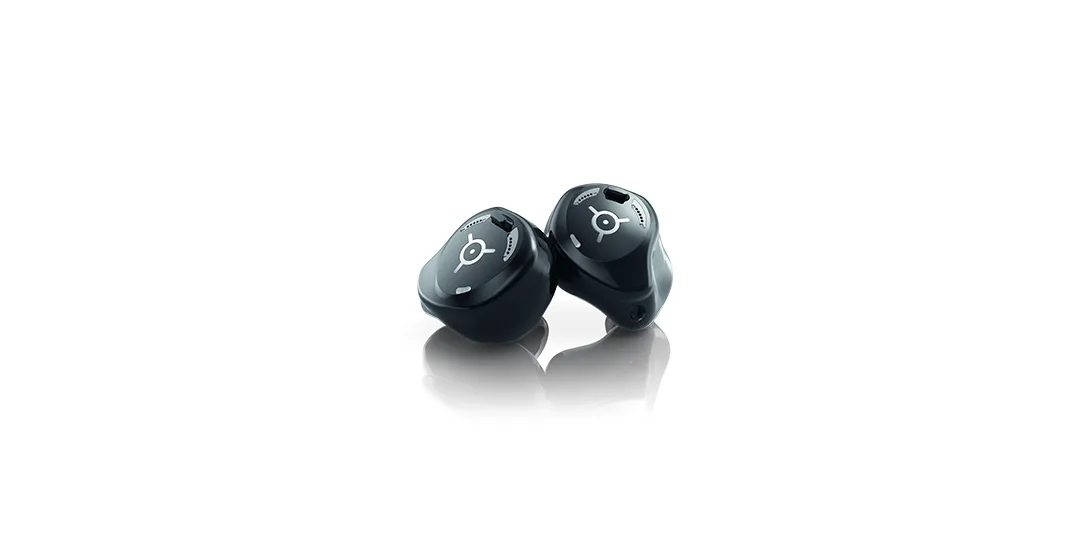


Bone-anchored hearing aids vs. traditional hearing aids

Bone-anchored hearing aids vs. traditional hearing aids
9 min.
Publication Date: March 12, 2026
If you’ve tried traditional hearing aids but still struggle to hear clearly, it’s natural to wonder whether another option might work better. For some people, hearing aids don’t deliver the expected results not because the technology is flawed, but because of how sound travels through the ear.
Bone-anchored hearing aids (often called BAHA) are sometimes discussed as an alternative in these situations. They work differently to traditional hearing aids and are considered for specific hearing profiles. Understanding how these two options compare can help clarify why one approach may be recommended over another.
- How do bone-anchored hearing aids and traditional hearing aids work?
- What types of hearing loss are each option recommended for?
- When might traditional hearing aids not be effective?
- What other factors influence the choice between BAHA and hearing aids?
- Choosing the right hearing solution with professional guidance
Note: Connect Hearing does not perform surgical bone-anchored hearing aid procedures. Surgical placement is completed by a medical specialist. However, some of our specialized clinics provide post-surgical fitting, programming, and ongoing support for bone-anchored hearing aid (BAHA) devices. Our Hearing Care Providers (HCPs) help assess hearing needs, explain available options, and support appropriate next steps in collaboration with your healthcare team.
How do bone-anchored hearing aids and traditional hearing aids work?
Traditional hearing aids work by reducing background noise, amplifying sound, and delivering it through the ear canal, eardrum, and middle ear to the inner ear. This approach relies on air conduction, meaning sound must travel through the natural hearing pathway to be processed effectively.
Bone-anchored hearing aids use a different method known as bone conduction. Instead of sending amplified sound through the ear canal, BAHA devices transmit sound vibrations directly through the skull to the inner ear. This allows sound to bypass parts of the ear that may be damaged, blocked, or not functioning properly.
Because these devices work in fundamentally different ways, they are not interchangeable solutions. The effectiveness of each depends largely on the type of hearing loss and the condition of the outer and middle ear.
What types of hearing loss are each option recommended for?
Hearing care professionals consider hearing loss type first when determining whether traditional hearing aids or bone-anchored hearing aids may be appropriate. Recommendations are always individualized and based on a combination of hearing test results, ear health, and daily listening needs.
Hearing loss often treated with traditional hearing aids
Traditional hearing aids are commonly recommended for people with sensorineural hearing loss, which occurs when the inner ear or auditory nerve is damaged but sound can still travel through the ear canal and middle ear.
In these cases, amplification is usually effective because the hearing pathway is intact. Hearing aids can make sounds louder and clearer, helping the brain better interpret speech and environmental sounds. For many people, traditional hearing aids remain the most appropriate and effective solution.
Hearing loss where bone-anchored hearing aids may be considered
Bone-anchored hearing aids may be evaluated for people with conductive hearing loss, mixed hearing loss, or single-sided deafness. In these situations, sound may have difficulty reaching the inner ear through the ear canal or middle ear, even when amplified.
For example, structural differences, chronic ear conditions, or medical issues can limit the benefit of traditional hearing aids. Bone conduction allows sound to bypass these obstacles, which may improve sound awareness and clarity for certain hearing profiles. However, candidacy is never automatic and always evaluated carefully.
When might traditional hearing aids not be effective?
Traditional hearing aids are highly effective for many people, but there are situations where amplification alone does not provide sufficient benefit. This is usually related to how sound travels through the ear rather than the quality of the device itself. Traditional hearing aids may be less effective when:
- Sound cannot travel efficiently through the outer or middle ear due to blockage or damage.
- Chronic ear infections or drainage make wearing in-ear devices difficult or uncomfortable.
- Anatomical differences prevent hearing aids from fitting or functioning properly.
- Sound is amplified but remains unclear, particularly for speech understanding.
- Hearing loss is asymmetrical, such as in single-sided deafness.
In these cases, bone-anchored hearing aids may be discussed as an alternative pathway rather than a replacement for hearing aids in general.
What other factors influence the choice between BAHA and hearing aids?
Beyond hearing loss type, several practical and medical factors influence whether traditional hearing aids or bone-anchored hearing aids may be more suitable. Hearing Care Providers (HCPs) look at the full picture rather than focusing on a single test result.
Ear health history plays an important role, especially for individuals with recurring infections or sensitivity that makes wearing traditional hearing aids challenging. Comfort, tolerance of in-ear devices, and lifestyle needs—such as work environments or communication demands—are also considered.
Medical suitability is another key factor and is evaluated by healthcare providers, not Hearing Care Providers (HCPs) alone. In some cases, the long-term commitment involved with a bone-anchored device, including recovery and ongoing care, is also an important consideration.
Choosing the right hearing solution with professional guidance
There is no one-size-fits-all solution when it comes to hearing care. Bone-anchored hearing aids and traditional hearing aids are both effective when used in the right situations, but they serve different needs.
Key takeaways
- Traditional hearing aids amplify sound through the ear canal.
- Bone-anchored hearing aids transmit sound through bone conduction.
- Hearing loss type plays a major role in determining suitability.
- Traditional hearing aids may not be effective in all cases.
- Professional assessment helps guide the right solution.
If you’re experiencing hearing challenges and want clarity about which options may be appropriate, a hearing assessment is a helpful first step. Book a free hearing test or find a Connect Hearing clinic near you to discuss your hearing concerns, understand available technologies, and learn which conversations to have with your primary healthcare provider.
Author
Connect Hearing Canada
Latest articles
- How long does it take to adjust to hearing aids? Timeline, challenges, and what to expect
- Hearing loss in one ear: Causes and treatment options for unilateral hearing loss
- Sudden hearing loss (SSNHL): Causes, symptoms, and when to seek immediate help
- Deafness vs hearing loss: What’s the difference and why it matters