
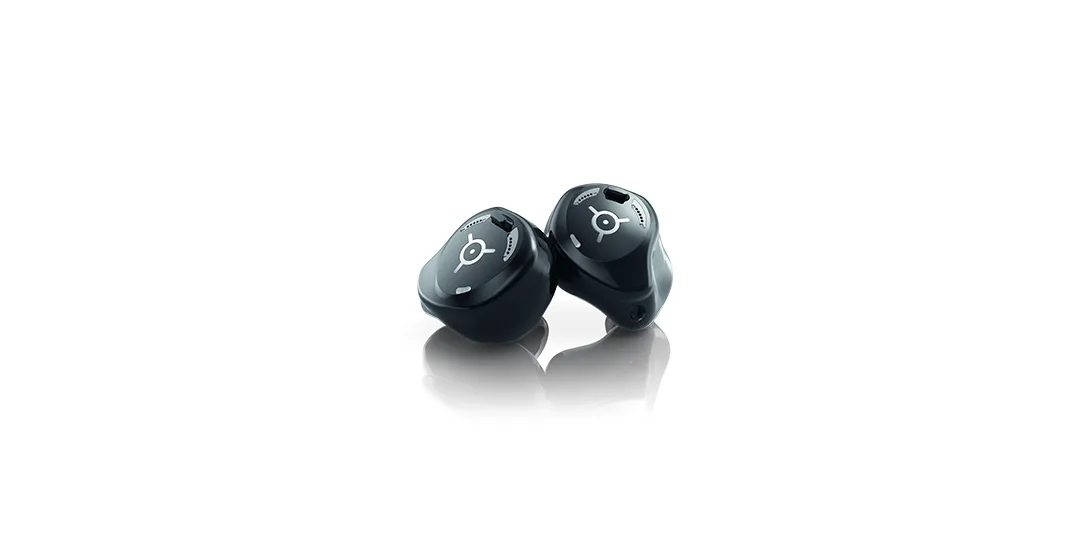


Bone-anchored hearing aids explained: Uses, benefits, and what to expect

Bone-anchored hearing aids explained: Uses, benefits, and what to expect
9 min.
Publication Date: March 12, 2026
Traditional hearing aids work well for many people, but they aren’t the right solution for every type of hearing loss. For individuals with certain hearing conditions—particularly those involving problems with how sound travels through the ear—amplification alone may not provide clear or comfortable hearing.
Bone-anchored hearing aids (often called BAHA or bone conduction hearing aids) are a specialized hearing solution designed for specific hearing needs. They work differently than traditional hearing aids and are considered when conventional options are not suitable or effective.
In this article, we’ll explain how bone-anchored hearing aids work, who they’re typically for, and what to expect if they’re being explored as an option.
- What is a bone-anchored hearing aid and how does it work?
- Who are bone-anchored hearing aids typically for?
- How do bone-anchored hearing aids differ from traditional hearing aids?
- What does the bone-anchored hearing aid process involve?
- Understanding long-term use and support options
Note: Connect Hearing does not perform surgical bone-anchored hearing aid procedures. Surgical placement is completed by a medical specialist. However, some of our specialized clinics provide post-surgical fitting, programming, and ongoing support for bone-anchored hearing aid (BAHA) devices. Our Hearing Care Providers (HCPs) help assess hearing needs, explain available options, and support appropriate next steps in collaboration with your healthcare team.
What is a bone-anchored hearing aid and how does it work?
A bone-anchored hearing aid is a hearing device that transmits sound through bone conduction rather than through the ear canal. Instead of amplifying sound and sending it through the outer and middle ear, a BAHA device delivers sound vibrations directly to the inner ear through the skull.
This approach is especially helpful when sound cannot travel efficiently through the ear canal or middle ear due to structural or medical factors. The system typically includes an external sound processor and a component that allows sound vibrations to be transmitted through bone. The inner ear then sends these signals to the brain, where they are interpreted as sound.
Because bone-anchored hearing aids bypass parts of the ear that may be damaged or blocked, they can provide clearer sound for certain hearing profiles that don’t benefit fully from traditional amplification.
Who are bone-anchored hearing aids typically for?
Bone-anchored hearing aids are not a general replacement for traditional hearing aids. They’re considered for specific situations where bone conduction offers an advantage over air conduction. That includes individuals with:
- Conductive hearing loss, where sound has difficulty traveling through the outer or middle ear.
- Mixed hearing loss, involving both conductive and sensorineural components.
- Single-sided deafness, where hearing is limited or absent in one ear.
- Inability to wear traditional hearing aids due to anatomy, chronic ear infections, or discomfort.
For many people in these situations, BAHA devices can improve sound awareness and clarity in ways that conventional hearing aids cannot. At the same time, they require careful consideration, as they involve a different long-term commitment and, in some cases, surgical placement. Candidacy is always determined through professional evaluation by a specialist.
How do bone-anchored hearing aids differ from traditional hearing aids?
The distinction between bone-anchored hearing aids and traditional hearing aids lies in how sound reaches the inner ear. Traditional hearing aids rely on air conduction, which involves amplifying sound and sending it through the ear canal, eardrum, and middle ear.
Bone-anchored hearing aids use bone conduction instead. By transmitting sound vibrations directly through bone, they bypass parts of the ear that may be damaged or not functioning effectively. This difference between bone-anchored hearing aids and traditional hearing aids is especially important for people with conductive or mixed hearing loss, where amplification alone may not overcome physical barriers to sound transmission.
A broader understanding of the various types of hearing loss can help put these differences into context and explain why certain solutions are better suited to specific hearing profiles.
What does the bone-anchored hearing aid process involve?
Assessing the need for a bone-anchored hearing aid typically involves several stages, and the process is designed to ensure the option is appropriate, safe, and aligned with an individual’s hearing needs. While the exact steps can vary from person to person, the process commonly includes:
- A comprehensive hearing test so a Hearing Care Provider (HCP) can evaluate hearing levels, hearing loss type, and how current hearing solutions are performing.
- Education and discussion, including an explanation of bone-anchored hearing aids, how they work, and what benefits and limitations to consider.
- A conversation with a primary healthcare provider, who can help determine whether further medical evaluation is appropriate and coordinate next steps.
- Specialist assessment, where medical professionals evaluate candidacy and determine whether a bone-anchored device is suitable.
- Surgical placement and recovery, if recommended, performed by qualified medical specialists outside of Connect Hearing.
- Post-surgical fitting and programming of the BAHA device, provided at select Connect Hearing clinics, including adjustments and ongoing follow-up support.
It’s important to note that hearing improvement with a bone-anchored hearing aid is not immediate. Recovery, device activation, and learning to interpret sound through bone conduction take time. Ongoing follow-up and adjustment play an important role in long-term success.
Understanding long-term use and support options
Bone-anchored hearing aids are a long-term hearing solution that require ongoing care, adjustment, and support. Like any advanced hearing device, success depends on proper setup, realistic expectations, and continued engagement.
Key takeaways
- Bone-anchored hearing aids use bone conduction rather than amplification.
- They are considered for specific hearing profiles, not as a first-line option.
- BAHA devices differ fundamentally from traditional hearing aids.
- Evaluation and surgery are handled by medical professionals.
- Long-term outcomes depend on adaptation, follow-up, and support.
If you or a loved one are exploring advanced hearing solutions and want clarity about available options, a hearing assessment is a helpful first step. You can book a free hearing test or find a Connect Hearing clinic near you to discuss hearing concerns, learn more about different technologies, and understand which conversations to have with your primary healthcare provider.
Author
Connect Hearing Canada
Latest articles
- How long does it take to adjust to hearing aids? Timeline, challenges, and what to expect
- Hearing loss in one ear: Causes and treatment options for unilateral hearing loss
- Sudden hearing loss (SSNHL): Causes, symptoms, and when to seek immediate help
- Deafness vs hearing loss: What’s the difference and why it matters